What’s the Connection Between GLP-1 and Endometriosis?
by Elizabeth Murtagh, Writer / Editor
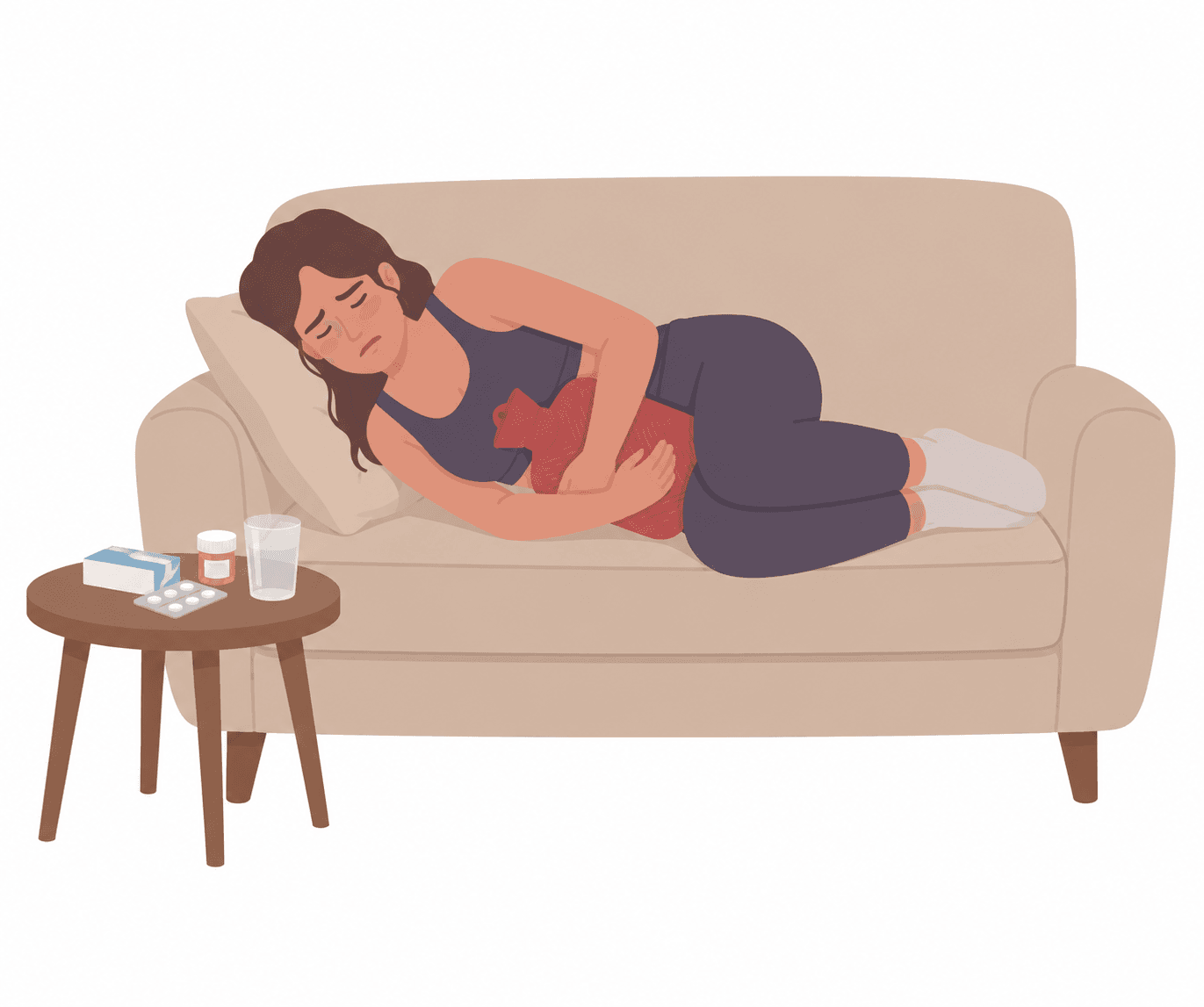
Depending on what side of social media you are on at the moment (my algorithm is almost entirely endometriosis content), you might have heard discussions about GLP-1 medications and their potential use in endometriosis treatment. It seems as though GLP-1 receptor agonists (GLP-1RAs), such as Wegovy and Ozempic, have endless possibilities at the moment, and for those living with endometriosis, this could be something really positive.
Endometriosis is a chronic condition that affects 1 in 10 people of reproductive age, assigned female at birth; although, the actual prevalence may be much higher as endometriosis has also been found in pre-pubescent girls and post-menopausal women. In endometriosis, tissue similar to the lining of the uterus grows outside of the uterus, typically on and around other organs in the pelvis, but has been found almost everywhere in the body including the lungs, legs, spine, eyes (causing blood tears), and the brain.
People with endometriosis — yes, people; although it predominantly affects women, endometriosis has also been found in cis men — often feel ignored by their doctors and continue to live in pain. Anyone with endometriosis knows the exhausting cycle of minimisation. Years of pain are brushed off as “normal”. Symptoms are blamed on stress, IBS, anxiety, hormones, or simply being a woman. In New Zealand, it takes an average of 10 years to receive a diagnosis. By that point, many patients have already spent years rearranging their lives around pain. Even after disease confirmation, there’s not an awful lot to be done. Endometriosis currently has no cure and the pathogenesis of the disease is unknown. The current treatments aim to manage pain and suppress the menstrual cycle. This may be effective for some patients as the endometriosis lesions respond to reproductive hormones similarly to normal endometrial tissue, which is why many experience worsening of symptoms when on their period. However, it is important to know that endometriosis is not ‘just’ a gynaecological disease, it is a whole-body chronic illness (and this is a hill I am willing to die on).
GLP-1 medications are most commonly used for type 2 diabetes and obesity. They improve insulin resistance, reduce systemic inflammation, promote weight loss and provide cardiovascular benefits. These pathways are intertwined with reproductive hormones, endometrial health, ovulation and chronic pelvic inflammation. So now, researchers are examining how these medications may influence fertility, menstrual health and related disorders. A recent survey of endometriosis patients already prescribed GLP-1RAs found that two-thirds of patients reported improvement in endometriosis-related symptoms and quality of life.
But how is GLP-1 related to endometriosis?
From here, I use a lot of technical language, such as the names of specific cells and important chemical messengers. You do not need to understand all of it to grasp the overall ideas, so don’t get too bogged down in the details!
How GLP-1 Relates to Endometriosis
Interestingly, researchers have found that GLP-1 appears to be reduced in the peritoneal fluid of women with endometriosis compared to controls. This decrease was correlated with reduced expression of CD86, a pro-inflammatory protein, critical for removing endometrial cells after retrograde menstruation. Retrograde menstruation is a very common phenomenon in which menstrual blood flows backward through the fallopian tubes into the pelvic cavity. While it is one of the leading theories behind endometriosis development, it does not fully explain why the disease occurs. Nonetheless, it remains an important part of current research into endometriosis pathogenesis.
Additionally, white blood cells called macrophages in the peritoneum of endometriosis patients express an increased amount of the enzyme CD10 protease. This could potentially explain the reduction of GLP-1 in these patients as CD10 protease is involved in the degradation of GLP-1.
Because of the reduction of GLP-1 in women with endometriosis, it seems plausible, at least in theory, that GLP-1 medications may provide some benefit to this population. I did some digging and found a few different mechanisms by which this may work.
Targeting Inflammation and Pain
The first is by targeting inflammation and immune regulation. Endometriosis thrives in and creates a chronic inflammatory environment. Endometriosis lesions release inflammatory cytokines, drive oxidative stress and amplify pelvic immune activation — essentially creating the perfect environment for chronic pain. GLP-1 has been shown to reduce inflammatory pain, particularly chronic inflammatory pain rather than acute pain. It does this by promoting the release of natural pain killer and mood enhancer β-endorphin, inhibiting oxidative damage, reducing inflammatory cytokines, and binding to and inhibiting TRPV1 (a primary pain sensor). Theoretically then, GLP-1 medications may provide benefit to patients by reducing inflammation-associated pain, fatigue, nerve pain, and ‘endo belly’ a painful combination of rock-hard bloating, constipation, and nausea.
GLP-1 medications may provide pain relieving benefits indirectly for endometriosis patients as well. These medications have been shown to reduce gut permeability (known as leaky gut) which causes symptoms such as bloating, inflammation and fatigue; approximately 45% of pelvic pain patients with endometriosis have some level of leaky gut. Additionally, they can reduce nerve pain and headaches (both very common symptoms with endometriosis) by promoting β-endorphin and anti-inflammatory cytokine IL-10 release.
Progesterone Receptor Upregulation
Another mechanism by which GLP-1 medications may influence endometriosis is through upregulation of progesterone receptors. GLP-1 medications appear to increase the expression of progesterone receptors in endometrial tissue. This response was stronger when combined with progestin therapy. Progesterone treatments are commonly used for endometriosis as they inhibit oestrogen. Enhanced progesterone receptor responsiveness could, in theory, improve symptom control or reduce hormonal resistance when using progesterone treatments for endometriosis – essentially improving the effectiveness of progesterone treatments.
Weight Loss and Oestrogen
GLP-1RAs may also help improve endometriosis symptoms by providing weight loss, although not simply for weight loss alone. Adipose (fat) tissue produces oestrogen. Endometriosis is an oestrogen-driven disease (ironically endometriosis cells also produce their own oestrogen – it’s a delightful self-fulfilling prophecy). Reducing adipose tissue reduces the peripheral oestrogen levels, which may reduce symptom or disease severity in women with obesity or overweight and endometriosis. However, for women who are normal weight or underweight the effect on oestrogen levels by weight loss may be minimal or even counterproductive.
Potential Concerns
It would be remiss of me to talk about these potential benefits without touching on some potential concerns. First and foremost, gastrointestinal problems are common adverse effects of GLP-1 medications, including symptoms such as nausea, bloating and constipation. Because many people with endometriosis already deal with these symptoms daily, the possibility of temporarily worsening them may cause hesitation. However, these adverse effects are often temporary and last only a few weeks in patients with type 2 diabetes and obesity. If these treatments reduced the endometriosis-caused gastrointestinal symptoms, the first few weeks of these side effects may just be worth it.
Additionally, many women with endometriosis struggle with symptoms when trying to get pregnant. As all of the current treatments other than pain relief (most of which cannot be taken when pregnant anyway) are hormonal and involve pausing or altering the menstrual cycle, they cannot be taken when trying to become pregnant. GLP-1 medications do not help this group of patients as they are not recommended to be used when pregnant or trying to get pregnant. This is not a negative towards the use of these treatments in endometriosis, just acknowledging that a subgroup of patients are yet again left without help.
We are still a long way from knowing whether GLP-1 medications will become a meaningful treatment option for endometriosis. Right now, most of the evidence is theoretical, observational, or based on related inflammatory pathways rather than clinical trials. But honestly, even seeing researchers seriously explore new approaches feels significant. Endometriosis treatment has remained relatively stagnant for decades, and patients are used to being told to “go on the pill” or learn to live with the debilitating pain. For those of us living with this disease, the idea that new treatments might be on the horizon feels validating as much as it feels hopeful.
Now we just need the clinical trials to catch up.
References
Aredo JV, Heyrana KJ, Karp BI, Shah JP, Stratton P. Relating chronic pelvic pain and endometriosis to signs of sensitization and myofascial pain and dysfunction. Semin Reprod Med. (2017) 35:88–97.
Bindra V, Nori M, Reddy R, Reddy R, Satpathy G, Reddy CA. Sciatic nerve endometriosis - The correct approach matters: A case report. Case Rep Womens Health. 2023;38:e00515. Published 2023 May 19.
Bourou MZ, Matsas A, Valsamakis G, Vlahos N, Panoskaltsis T. The Potential Role of Glucagon-Like Peptide-1 (GLP-1) Receptor Agonists as a Type of Conservative Treatment of Endometrial Cancer in Women of Reproductive Age: A Review of the Literature and a Call for Study. Cureus. 2024;16(9):e69678. Published 2024 Sep 18.
Ellis K, Munro D, Clarke J. Endometriosis Is Undervalued: A Call to Action. Front Glob Womens Health. 2022;3:902371. Published 2022 May 10.
Gholiof M, Kalani N, Leonardi M. Effects of Glucagon-Like Peptide-1 Receptor Agonists (GLP-1RAs) on Endometriosis Symptoms Management and Quality of Life: An International Survey Study. Authorea. February 24, 2026. Pre-print
He Y, Xu B, Zhang M, et al. Advances in GLP-1 receptor agonists for pain treatment and their future potential. J Headache Pain. 2025;26(1):46. Published 2025 Feb 27.
Ichida M, Gomi A, Hiranouchi N, et al. A case of cerebral endometriosis causing catamenial epilepsy. Neurology. 1993;43(12):2708-2709.
Krasnyi AM, Sadekova AA, Smolnova TY, et al. The Levels of Ghrelin, Glucagon, Visfatin and Glp-1 Are Decreased in the Peritoneal Fluid of Women with Endometriosis along with the Increased Expression of the CD10 Protease by the Macrophages. Int J Mol Sci. 2022;23(18):10361. Published 2022 Sep 8.
Mounjaro NZ Data Sheet.
Nezhat C, Lindheim SR, Backhus L, et al. Thoracic Endometriosis Syndrome: A Review of Diagnosis and Management. JSLS. 2019;23(3):e2019.00029.
Rahman S, Youssef Y, Maroun G, Inaty D, Kheil MH, Moawad G. Eyes, menstruation and endometriosis. Facts Views Vis Obgyn. 2023;15(2):107-113.
Rei C, Williams T, Feloney M. Endometriosis in a Man as a Rare Source of Abdominal Pain: A Case Report and Review of the Literature. Case Rep Obstet Gynecol. 2018;2018:2083121. Published 2018 Jan 31.
Saxenda NZ Data Sheet.
Sola-Leyva A, Pathare ADS, Apostolov A, et al. The hidden impact of GLP-1 receptor agonists on endometrial receptivity and implantation. Acta Obstet Gynecol Scand. 2025;104(2):258-266.
Trulicity NZ Data Sheet.
Victoza NZ Data Sheet.
Wegovy NZ Data Sheet.